
PRESS RELEASE
Roundtable on the National Restoration Plan
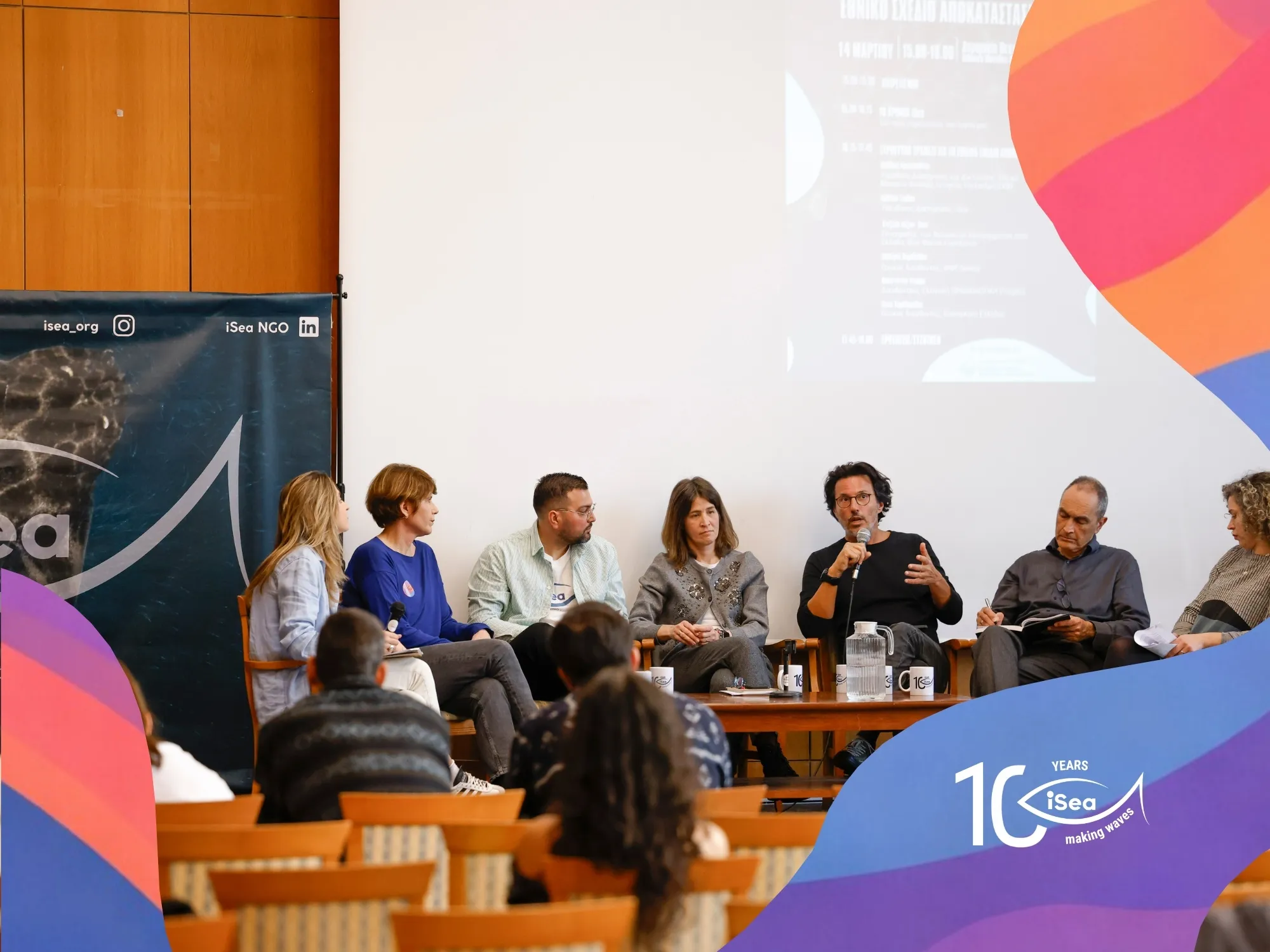
Last Saturday, March 14, 2026, the environmental organization iSea and the Greek Biotope/Wetland Centre of the Goulandris Natural History Museum held a roundtable discussion at the Thessaloniki City Hall on the topic of the National Nature Restoration Plan, the drafting of which is an obligation for all member states under the European Nature Restoration Regulation.
Regulation 2024/1991 on Nature Restoration was approved and came into force in August 2024 and is now one of the most important environmental laws of the European Union, contributing to halting biodiversity loss and aiming at the sustainable recovery of ecosystems. Under this regulation, gradual and legally binding targets are set for the restoration of degraded terrestrial and marine ecosystems (as well as “human-made” ecosystems such as agricultural and urban ones). To achieve these goals, member states must develop National Restoration Plans and define the necessary restoration measures.
The contribution and coordination among participating stakeholders, as well as informing interested parties, are particularly important for the development and effective implementation of the National Restoration Plan. In this context, and as part of the celebration of 10 years of iSea, the event was held with the participation of Vasiliki Chrysopolitou (Head of Conservation and Networking, Goulandris Natural History Museum/ Greek Biotope/Wetland Centre), Ioannis Giovos (Head of Conservation, iSea), Angela Lazou-Dean (Head of Marine Programs in Greece, Blue Marine Foundation), Dimitris Karavellas (Director General, WWF Greece), Konstantina Demiri (Director, Hellenic Ornithological Society), and
Nikos Charalambidis (Director General, Greenpeace Greece), under the auspices of the Municipality of Thessaloniki.
A particularly engaging discussion took place among the invited speakers and the audience. The interventions/contributions/ remarks highlighted the framework of legislation, policies, and strategies that led to the adoption of this ambitious regulation, especially following strenuous efforts and pressure from environmental organizations and civil society actors. The importance of this European environmental law and the subsequent challenges associated with its implementation were also
discussed in depth, while stakeholders involved in the National Restoration Plan analyzed their actions so far toward its drafting. At the same time, examples of restoration projects and nature protection initiatives were presented, followed by forecasts and assessments regarding the future implementation of the regulation and, specifically, the measures of the upcoming National Restoration Plan.
From this especially interesting discussion, two key points emerged: the need for collaboration and dialogue among all stakeholders, especially in such large and important initiatives, as well as the need to make full use of such ambitious plan, of such an important “opportunity,” in order to move from protection and conservation toward the gradual restoration of nature.
The competent authority for implementing the regulation in Greece is the Ministry of Environment and Energy. For the drafting and submission of the first National Restoration Plan to the EU, the ministry is working in collaboration with the Goulandris Natural History Museum/ Greek Biotope/Wetland Centre. The project is funded by the Green Fund and involves scientific institutions, organizations, and others, including iSea for sharks and rays.
You can find the recorded event here: https://youtu.be/1qUJNuCghI8
